
Types of Engagement Rings: Styles and Settings Explained
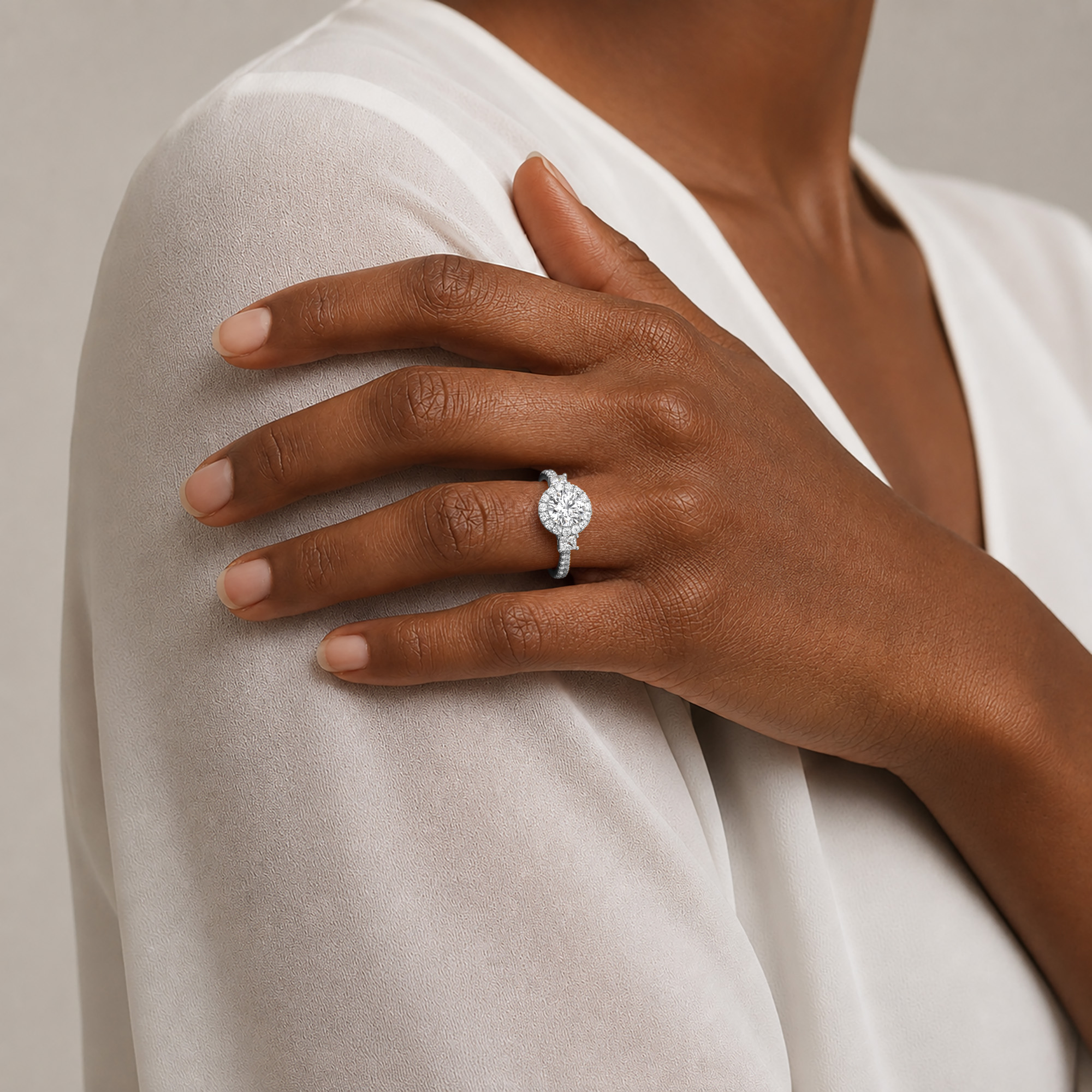
Choosing an engagement ring involves two related decisions: the diamond you love and the design that holds it. A solitaire, halo, three-stone ring and pavé band can each have a very different character, even when the centre diamond is identical. This guide explains the main types of engagement rings, how they look and what to consider before choosing.
What is a solitaire engagement ring?
A solitaire features one principal gemstone without a surrounding cluster of accent stones. It is a classic choice because it draws attention to the centre diamond and works with many diamond outlines. A solitaire may be set with claws or a bezel, sit high or low, and have a plain or detailed shank. The word solitaire does not prescribe a particular metal, claw count or mounting height.
Solitaire designs suit people who favour simplicity, a clear centrepiece and an understated appearance. They still need regular checks of the centre setting, especially after a knock.
What is a halo engagement ring?
A halo surrounds the centre stone with smaller accent stones. It can create a larger face-up outline and a more intricate, sparkling appearance. The effect depends on the size and arrangement of the accent stones. More small settings can mean additional cleaning and maintenance, so inspect the workmanship and understand future repair options.
What is a hidden halo?
A hidden halo generally places accent stones beneath the centre diamond, often visible mainly from the side. It introduces detail without the same face-up frame as a traditional halo. Some designs are subtle; others are more elaborate. Request side-view photographs to see what the detail actually looks like.
What is a three-stone engagement ring?
A three-stone ring places two side stones beside a centre stone. The stones can be matched or intentionally different in shape and size. This style can create width and visual balance across the finger. Check how the side stones sit, how exposed their edges are and whether a future wedding band can sit comfortably alongside the design.
What is a pavé engagement ring?
Pavé uses small diamonds set along some or all of the band. It creates fine additional sparkle around the centre. A plain band can feel quieter and may be simpler to resize, while pavé may limit resizing depending on how far the stones extend. Neither is automatically more luxurious: choose the detail that suits your taste and daily routine.
What is a bezel-set engagement ring?
A bezel uses a metal rim to hold all or part of the diamond’s perimeter. It gives a distinct framed outline and can cover vulnerable edges. Claw settings instead grip the stone at selected points and leave more of its edge exposed. Both can be secure when well designed; actual protection and comfort depend on the complete mounting.
Cathedral, low-profile and other ring designs
Cathedral shoulders rise towards the centre setting, giving the ring an architectural side profile. A low-profile ring positions the centre relatively close to the finger. These are not opposing categories: a cathedral ring may be relatively high or low. Consider whether the setting catches on clothing, how the gallery is constructed and how a wedding band will fit beside it.
Choosing the right diamond shape
Shape changes the finished design. Round brilliant diamonds create a classic outline and lively flashes. Oval, pear and marquise stones introduce length; emerald and Asscher cuts use broad step facets; cushion and radiant cuts have different forms of brilliant-style sparkle. Princess cuts offer a crisp square outline, while heart shapes are distinctive and require careful symmetry assessment.
For a more detailed comparison, read the Diamond Shapes Guide. Shape and setting must ultimately be assessed together: not every mounting suits every stone or size.
Does diamond shape matter more than setting?
They do different jobs. The diamond controls much of the centrepiece’s outline and light behaviour; the setting influences the ring’s framing, height, protection and comfort. A beautiful diamond in an unsuitable mounting may not be practical for the wearer. Equally, an attractive setting cannot compensate for a diamond you do not like looking at.
Choosing a metal
White gold, yellow gold, rose gold and platinum create different appearances and maintenance needs. White gold is commonly rhodium plated; platinum develops its own surface patina; yellow and rose gold bring warmer tones. Purity, alloy composition and the exact ring construction matter more than assuming one metal is universally best. See White Gold vs Yellow Gold for the existing colour comparison.
Everyday wear, wedding bands and care
Think about the wearer’s work, hobbies, preference for a smooth profile and tolerance for periodic maintenance. High-set heads and exposed claws may catch more readily; accent-stone designs have more settings to inspect. A straight wedding band may sit flush beside some designs but leave a gap beside others. Neither is wrong, provided the result is intentional.
Before buying, ask for a top and side view, measurements where available, guidance on resizing and a realistic explanation of servicing. Read How to Care for Your Diamond Engagement Ring for practical maintenance advice.
Which engagement ring type should you choose?
Choose a solitaire if the centre diamond should be the undisputed focus. Consider a halo for more decorative face-up sparkle, a hidden halo for side-view detail, a three-stone ring for a broader arrangement, or a pavé band for fine sparkle along the shoulders. A bezel may appeal if you like a framed outline, while a cathedral profile may suit someone who enjoys sculptural design.
The best choice is the one that reflects the wearer’s style, works comfortably in everyday life and holds the chosen diamond appropriately. Compare actual finished-ring designs rather than assuming that a style name guarantees a particular fit or level of security.
Continue exploring
Read Should You Choose the Diamond First or the Ring Setting?, the Diamond Shapes Guide, and How to Choose the Perfect Engagement Ring.
Setting style is not the same as setting height
Solitaire describes the number of principal stones, whereas claw or bezel describes how a stone is held. Cathedral describes shoulders rising towards the centre setting, not a guaranteed height above the finger. A ring can combine several of these features. A hidden halo is a decorative detail and does not, by itself, determine how low a ring sits or whether a wedding band will fit flush.
Split shank, tapered shoulders and twisted bands
A split shank divides as it approaches the centre setting. Tapered shoulders narrow or widen towards the head. Twisted bands introduce curved or intertwined lines. These design terms describe appearance, not a universal standard of strength or comfort. Their suitability for resizing, cleaning and a future wedding band depends on the precise construction and whether accent stones occupy the shoulders.
How to assess everyday practicality
Examine the ring from above and from the side. Ask how exposed the diamond's corners are, whether claws or small accent stones could catch on fabric, and whether the mounting will tolerate your usual activities. No style is automatically 'safe for all lifestyles'. Metal thickness, craftsmanship, stone size, fit and the intended use all matter. A qualified jeweller should assess a particular mounting where there is uncertainty.
Wedding-band fit should be checked, not assumed
A straight wedding band may sit flush beside some engagement rings, while others require a shaped or contoured band. The centre head, shoulder design, gallery and any halo can affect clearance. Request a side view and, where possible, a trial pairing of the actual designs. Do not promise compatibility merely because two rings share a metal colour or brand.
Choosing a design without relying on catalogue assumptions
Begin with the visual style: understated solitaire, framed halo, symbolic three-stone or additional pavé detail. Then consider practical priorities: ease of cleaning, maintenance, possible resizing and wedding-band pairing. Finally confirm the actual stone, metal, mounting dimensions and supplier compatibility. This guide explains styles that exist in the wider jewellery market; it is not a Kings Diamonds inventory list.